
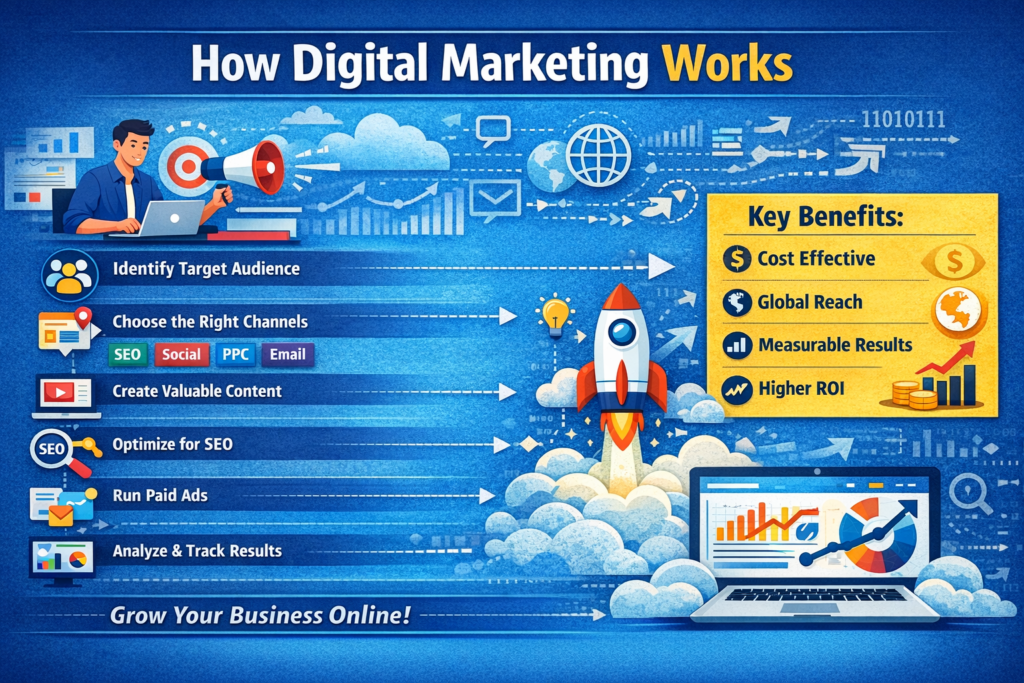

In today’s internet-driven world, digital marketing has become one of the most powerful ways for businesses to reach customers. Whether you run a small business or a large company, understanding how digital marketing works can help you grow faster and smarter
What Is Digital Marketing?
\Digital marketing is the promotion of products or services using online channels such as search engines, social media, email, websites, and mobile apps. Instead of traditional advertising like newspapers or TV, digital marketing focuses on reaching people where they spend most of their time — online.
How Digital Marketing Works (Step by Step)
Digital marketing works through a structured process. Here’s how it typically happens:
1. Identify the Target Audience
The first step is understanding who your ideal customers are. Marketers study demographics, interests, online behavior, and problems the audience wants to solve. This helps create the right message for the right people.
2. Choose the Right Channels
Different businesses use different digital channels, such as:
Search Engine Optimization (SEO)
Social Media Marketing
Content Marketing
Email Marketing
Pay-Per-Click (PPC) Advertising
The choice depends on where the target audience spends time.
3. Create Valuable Content
Content is the heart of digital marketing. Businesses create blogs, videos, social posts, and ads that educate, entertain, or solve problems. Good content builds trust and attracts potential customers.
4. Optimize for Search Engines (SEO)
SEO helps websites rank higher on search engines. Marketers use keywords, improve website speed, fix technical issues, and build backlinks so that more people can find the website organically.
5. Promote Through Paid Ads
Many businesses also use paid advertising like Google Ads or social media ads to get faster results. These ads target specific audiences and drive immediate traffic.
6. Engage and Nurture Leads
Once visitors come to the website or social page, businesses engage them through emails, retargeting ads, and helpful content. The goal is to turn visitors into customers.
7. Track and Analyze Performance
Digital marketing is data-driven. Marketers use analytics tools to track traffic, conversions, click rates, and user behavior. Based on data, they improve campaigns for better results.
Key Benefits of Digital Marketing
Cost-effective compared to traditional marketing
Global reach with precise targeting
Measurable results in real time
Final Thoughts
Digital marketing works by combining the right audience, the right message, and the right online channels. It is not a one-time activity but a continuous process of testing, analyzing, and improving. Businesses that understand and apply digital marketing effectively can build strong online visibility, attract more customers, and grow consistently in the digital age.
SEO Tools in Digital Marketing
SEO tools play a vital role in digital marketing by helping businesses improve their website visibility on search engines. These tools assist marketers in keyword research, competitor analysis, backlink tracking, site audits, and performance monitoring. By using SEO tools, marketers can identify the right keywords that potential customers are searching for and optimize website content accordingly.
Popular SEO tools such as Google Analytics, Google Search Console, Ahrefs, SEMrush, and Moz provide valuable insights into website traffic, ranking positions, and technical issues. They help detect errors like broken links, slow page speed, and missing meta tags, which can negatively impact search rankings.
In today’s competitive online market, SEO tools are essential for making data-driven decisions. They save time, improve accuracy, and help businesses achieve higher search engine rankings, increased organic traffic, and better online visibility.